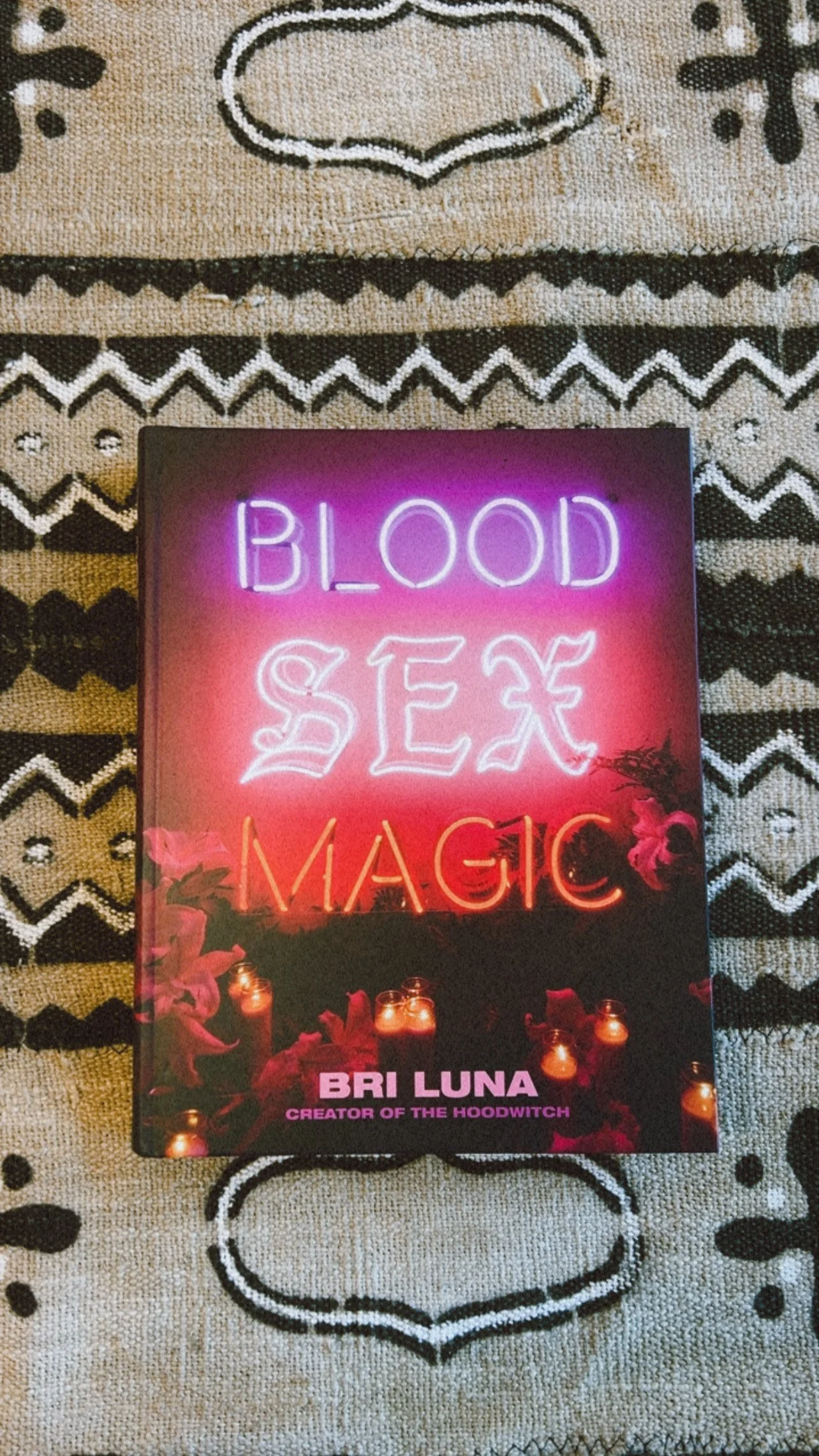
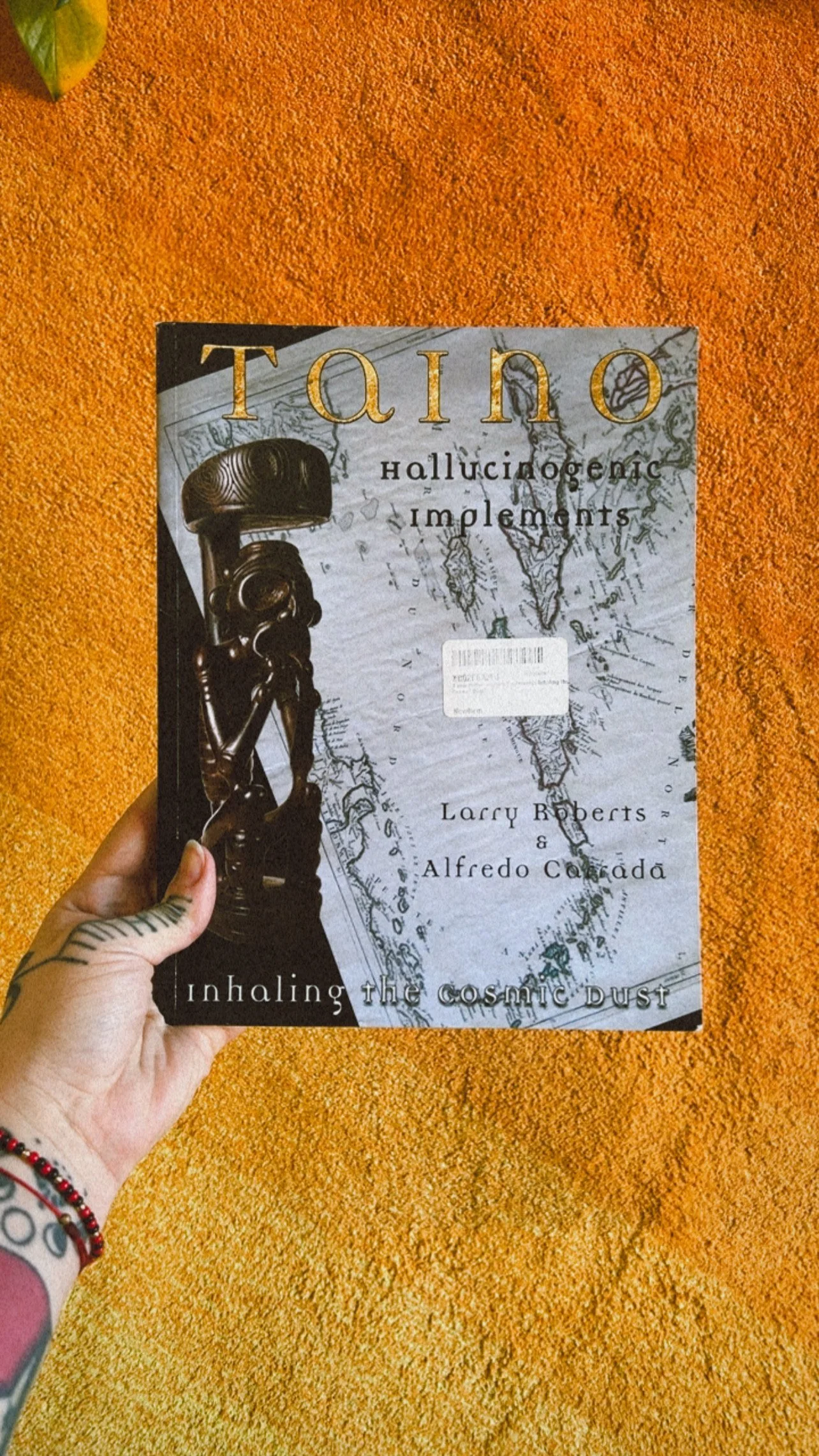
 Image 1 of 2
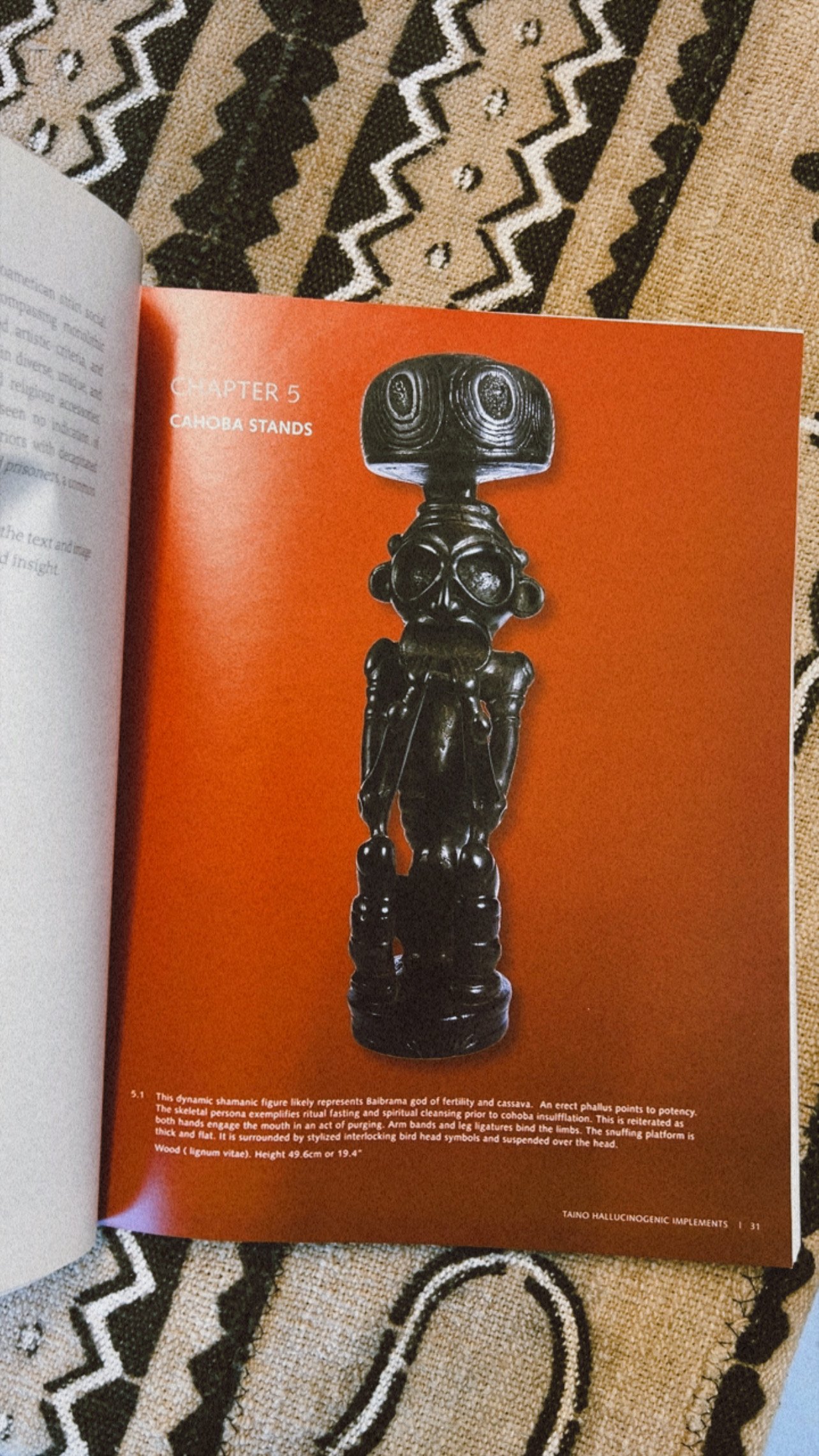 Image 2 of 2
Taíno Hallucinogenic Implements offers a deep exploration of the sacred tools used by the Taíno peoples of the Caribbean in ceremonial, medicinal, and divinatory contexts. Focusing on objects such as duhos, cohoba inhalers, vomit spatulas, ritual vessels, and carved idols, the book reveals how these implements supported altered states of consciousness used for ancestral communication, healing, governance, and cosmological insight.
Grounded in archaeology, ethnohistory, and Indigenous knowledge systems, the text traces the role of entheogenic practice—particularly cohoba—in Taíno spiritual life, emphasizing the sophistication of their ritual technologies and worldview. This work challenges colonial narratives by centering Taíno ceremonial science as an intentional, communal, and highly developed spiritual tradition.
Taíno Hallucinogenic Implements offers a deep exploration of the sacred tools used by the Taíno peoples of the Caribbean in ceremonial, medicinal, and divinatory contexts. Focusing on objects such as duhos, cohoba inhalers, vomit spatulas, ritual vessels, and carved idols, the book reveals how these implements supported altered states of consciousness used for ancestral communication, healing, governance, and cosmological insight.
Grounded in archaeology, ethnohistory, and Indigenous knowledge systems, the text traces the role of entheogenic practice—particularly cohoba—in Taíno spiritual life, emphasizing the sophistication of their ritual technologies and worldview. This work challenges colonial narratives by centering Taíno ceremonial science as an intentional, communal, and highly developed spiritual tradition.